
As the population ages so too will New Jersey’s workforce, making it essential that employers learn how to transform their workplaces into more inclusive and supportive environments for older workers.
That’s why New Jersey Advocates for Aging Well (NJAAW) designed a yearlong grant project to seed an “Age-Friendly Employer” movement in the Garden State.
NJAAW recruited 10 businesses to join the Certified Age-Friendly Employers (CAFE) program, a global initiative that provides employers with detailed guidance and strategies on how to become a more attractive place for people over age 50 to work.
The goal was to create a powerful cohort of businesses who would serve as examples to other New Jersey employers and demonstrate the benefits of hiring and retaining older workers, said Dr. Cathy Rowe, Executive Director of NJAAW.
“We’re seeking to open employers’ eyes to the tremendous talent pool, experience and assets that older workers can offer them,” Rowe said. “In recent decades, companies large and small have learned the importance of ingraining DEI policies and strategies into their employee hiring and retention practices, but older workers are not usually a part of those considerations – and they need to be.”
New Jersey has 2 million residents over the age of 60, and quarter of them are still in the workforce, some because they want to keep pursuing their professional passions, many because they need to keep earning to make ends meet.
“Planning for this new employment trend is essential to the economic security of older New Jerseyans, and it’s also essential to the health of New Jersey’s economy and the growth of its business climate,” Rowe said.
In 2021, New Jersey demonstrated its commitment to age-inclusive employment by passing a law eliminating mandatory retirement ages, but more workplace culture changes are needed to ensure older workers are welcomed and allowed to thrive, she added.
The CAFE program offers employers consultants, training and other recruitment and retention tools. The two-year certification process was created in 2006 by the Boston-based Age-Friendly Institute, which is now part of a global company called 55/Redefined.
Hundreds of companies worldwide have sought the certification, many motivated by concern over losing experienced workers or because they couldn’t fill key positions, said Carol Jackson, director of the Age Friendly Institute’s CAFÉ program in the Americas.
“We evaluate their hiring and employee retention practices and offer them a road map for how they can create a workplace culture that better reflects the needs and desires of older workers,” Jackson said.
Many older workers desire flexible schedules, work-from-home options or to be able to retain health and life-insurance contributions and other benefits, but some of their other priorities might be less obvious to employers, Jackson said.
One common reason an older, experienced worker might decide to leave their longtime careers is because they no longer want the stress of being in a management role, but the company doesn’t offer them an option to keep using their talents in other ways.
“An older worker might say, “I’ve been a manager for 30 years and I’m tired of it. I just want to go back to being an accountant,’” Jackson said. “But many companies don’t offer a pathway for going from a leadership role back to an individual contributor role.”
Another common misstep employers make is only investing in training and growth opportunities for its younger workers and new hires – not recognizing that older workers also have a desire to keep learning and growing in their fields.
In recruiting New Jersey businesses to join the CAFE program, NJAAW and the Age-Friendly Institute targeted ones that were most friendly to the idea of hiring older workers or who saw cache in having an “Age-Friendly Employer” label.
“The certification makes a statement to their current workers, their prospective employees and to their customers, “Jackson said. “When given a choice older consumers are more likely to buy from a company that shows a market focus toward older workers.”
Lauren Baruch, chief human resource officer for Jewish Home Family, said the organization sought the age-friendly certification to build on its history of creating a supportive workplace environment at both of its elder care residences in Bergen County.
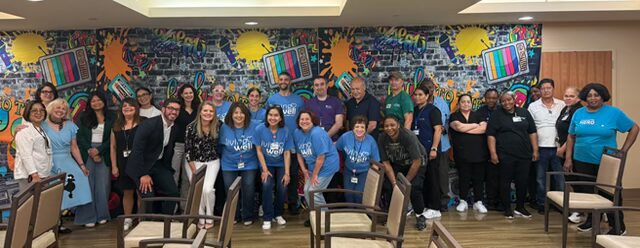
About 40 percent of Jewish Home Family’s employees are over age 50, some still providing care to children, grandchildren or older relatives, and many with questions about how they will be able to manage their own needs later in life.
Since joining the program, Jewish Home Family has begun to hold monthly workgroup meetings of managers and front-line-staff, in large part to find out, “What are their worries? In what areas of their life could they use more support?”, Baruch said.
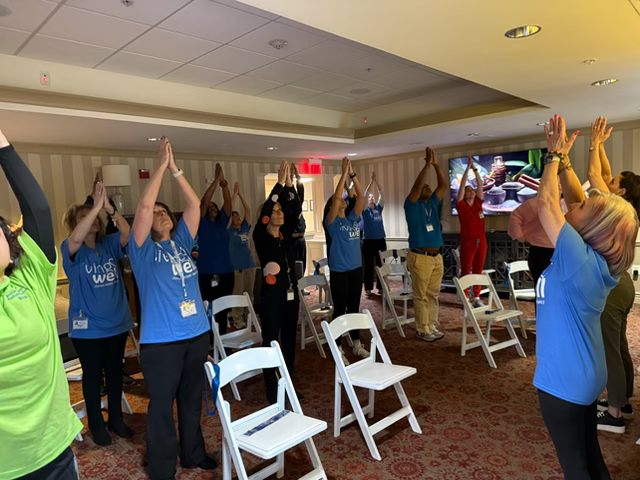
This has led to Jewish Home organizing “Living Well” presentations on topics pertinent to workers of all ages, such as one to help workers on the verge of Medicare eligibility decide whether they are better off joining that government program or keeping their employer plans, and another on caregiving entitled “Sandwiches for The Sandwich Generation.”
In addition to Jewish Home Family, three other elder care companies sought the certification: Lutheran Social Ministries; Parker Health Group; and Peace Care NJ. Two arts nonprofits also joined – New Jersey Performing Arts Center and The Count Basie Center for the Arts.
Others who were certified were EI Associates, an architectural firm in Cedar Knolls, Allen Flavors, a food and beverage company based in South Plainfield, and Columbia Bank.
Now that are New Jersey examples to share of the benefits of Age-Friendly Employer training, NJAAW will continue to work to promote the certification and encourage more of the state’s employers to see the value in keeping workplace doors open to older workers.
“We want to keep the momentum going,” Rowe said. “It’s important for everyone – especially our state’s government and business leaders – to recognize that older adults who remain in the workforce are going to have more money to spend in New Jersey’s economy and that means they will be better able to afford housing, health care and their other late-in-life needs.
“And that means everybody benefits – the individual and the state as a whole.”