

A loss of mobility can make getting around a challenge even in a place like Jersey City, a major metropolitan hub of bus, train, ferry and auto travel.
That was one of the key findings of the age-friendly community needs assessment conducted between January and April 2026 in this diverse Hudson County city.
“A lot of seniors who filled out the survey said they struggle to get their medical appointments in particular,” said Joan Eccleston, director of the Division of Senior Affairs.
The division succeeded in getting more than 800 older residents to complete the surveys, which were printed in both English and Spanish and distributed at Jersey City’s two senior centers and its 10 senior lunch sites, as well as to the constituencies of the local AARP and Urban League chapters and a local adult day center.

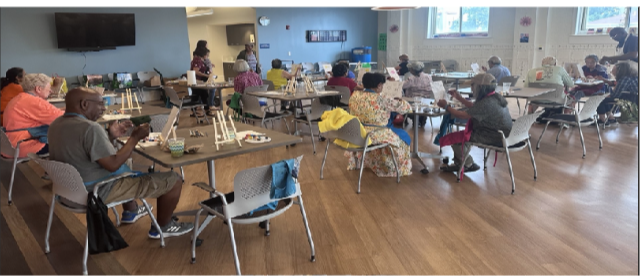
The survey was undertaken as a foundational step toward Jersey City’s goal of creating an age-friendly action plan and joining the AARP Network of Age-Friendly States and Cities.
Eccleston, who has worked for the senior affairs division for more than three decades, said she appreciated that the grants program allowed the city to conduct its first comprehensive outreach to older residents in this incredibly diverse and populous city.
“I was meeting people I never met before, people who don’t typically come to our senior centers,” Eccleston said.
With a population of more than 300,000, Jersey City is New Jersey’s second-largest municipality and the most ethnically diverse city in the United States, with 42 percent of its residents born in other countries and more than 40 different languages spoken.
Jersey City’s 30 miles of waterfront helped make it a major manufacturing center and transportation hub served by buses, trains and ferries to New York City, as well as the terminus of the Holland Tunnel.
Yet, despite a plethora of transportation options, including a micro-transit system called Via Jersey City that connects transit rider to bus or train hubs, older adults with mobility limitations said they found it challenging to walk the few blocks that riders typically must travel to a reach a pick-up point.

That finding has city officials looking into whether that VIA micro-transit system can be adjusted to allow door-to-door services for those who need it, Eccleston said.
Another survey finding that surprised Eccleston was how beleaguered many older residents felt about the creep of technology into all aspects of their lives. Many expressed frustrations with the city’s new digital parking meters and on-line permit applications as well as the need for them to be versed in social media and apps to learn of news and announcements or to figure out how to use a QR code on a restaurant menu.
That has prompted the Division of Senior Affairs to begin pursuing the creation of a new digital technology training classes, including possibly partnering with local colleges to launch a technology education program that pairs students with older adults who need one-on-one help learning new technology skills.
“It would almost be like a reverse mentoring program,” Eccleston said.
Affordable housing was also cited as a major issue, with apartment rents having grown to some of the highest rates in the country over the past two decades as the city has become more of a draw for New York City companies and residents looking to relocate.
A decline in older adults’ social connections is another factor the city will have to consider as it begins to draft its age-friendly action plan, Eccleston said.
“When I first started, we had probably 50 or 60 senior clubs or groups in the city, now we only have a couple,” she said. “People are working later in life and aren’t as interested in joining things in the way people did in the past. This is something else we need to take into consideration in planning for the future.”